‘‘Any and All Residential Growth’: What Camden’s August 31 Hearing Revealed
Camden's 387-unit appeal has exposed conflicting readings of the county UDO, a rushed May determination and questions that can affect any property owner.

This audio narration was generated by Camden Tribune using the open-source Kokoro speech model.
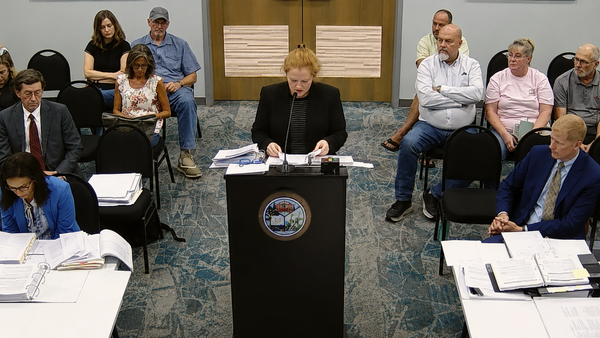
CAMDEN COUNTY, N.C. — What began August 31 as an appeal over 387 proposed homes became something larger: an examination of how Camden County has interpreted and administered a development moratorium that has shaped residential growth for more than two years.
The most consequential testimony came from County Manager Erin Burke, who is also serving as acting UDO Administrator.
Burke said staff's intent in drafting the 2024 moratorium was to:
pause any and all residential growth.
Later in the same hearing, she acknowledged that the May 18 determination now under appeal had been rushed.
The mistake was not doing additional research and rushing to a determination when I should have taken additional time to provide you with the information that you're asking now.
Those statements now sit at the center of the dispute.
The first describes a broader staff objective than the language commissioners ultimately adopted. The second raises questions about the process used to apply that moratorium to one of Camden's largest proposed residential developments.
What happened August 31
The county presented its case through Burke for several hours.
Staff defended three principal conclusions: that the proposal constitutes a residential subdivision covered by the moratorium; that residential and future commercial uses cannot proceed together under the existing Highway Commercial zoning without rezoning; and that the material submitted did not establish compliance with density and open-space requirements.
After the county rested, the appellant asked the Board to end the case without requiring the developer to present its remaining evidence, arguing that the county had failed to justify its determination.
County counsel opposed that request, arguing that Burke had extensively explained her decision and that the county had presented enough evidence for the appeal to continue.
The Board denied the motion.
That was not a ruling that the county was correct. It meant the developer would have to proceed with its case.
After a recess, the Board reconvened and voted to continue the hearing to a future date to be determined by the county in consultation with the appellant.
No final decision has been issued.
The staff objective was broader than the adopted words
The moratorium itself began with a legitimate public concern.
In 2024, commissioners were told Camden faced limited water and wastewater capacity. They explored a temporary development pause while the county pursued infrastructure expansion, permitting, and funding.
The policy ultimately adopted applied to residential subdivisions and multi-family development.
Burke's August 31 testimony described staff's goal more broadly: “any and all residential growth.”
Cross-examination repeatedly separated staff's intent from the words actually adopted by commissioners.
That distinction matters because the Crouse proposal consists of triplexes and quadraplexes.
Camden's UDO defines multi-family development as a building containing five or more dwelling units. Triplexes and quadraplexes are separate categories.
Burke acknowledged that the proposed buildings are not multi-family under that definition.
The county instead relies primarily on its position that the proposal constitutes a residential subdivision.
That argument has textual support.
Camden defines subdivision broadly to include divisions into lots, building sites, or other divisions for development, including development involving new streets or changes to existing streets. The Crouse proposal includes numerous building sites and internal roads.
Whether that configuration legally creates the type of division contemplated by the UDO remains for the Board to decide.
The hearing nevertheless raises a broader accountability question:
Did staff apply the moratorium according to the narrower language commissioners enacted, or interpret that language broadly enough to accomplish the wider residential-growth pause Burke said staff intended?
The evidence presented so far does not establish the answer.
Density remains a legitimate unresolved question
The county's case should not be reduced to the problems surrounding the May determination.
There are real development questions that remain unresolved.
Highway Commercial zoning allows a base residential density of 1.08 units per acre. At that rate, 387 dwelling units require approximately 358 acres.
The Crouse tract has been identified in county records as approximately 358.38 acres.
That places the proposed unit count very close to the tract's base-density capacity if that is the governing rate.
The UDO can allow a higher 1.45-unit rate on lots served by public sewer, and authorized development incentives can affect density as well. The hearing did not conclusively establish which calculation governs the proposal.
Burke testified that the applicant clustered the homes on one portion of the property while using the larger tract to support density.
The county's concern is what happens if acreage supporting those homes is later developed commercially or otherwise removed from the residential calculation.
If the 387 homes remain while the acreage supporting them shrinks, density could exceed the permitted maximum.
The open-space analysis is similarly unfinished.
Burke testified that staff lacked an engineered open-space calculation needed to establish full compliance.
The incomplete record is not solely the county's doing. Testimony established that the applicant requested a determination while knowing it had not submitted a complete major site plan.
That helps explain why some questions remained unanswered.
It does not resolve whether the county had enough information to support every conclusion contained in the determination it chose to issue.
The rezoning requirement remains unresolved
The county's separate rezoning determination presents a different question.
Burke testified that combining the proposed residential development with future commercial principal uses would require rezoning to Mixed-Use or Planned Development.
Yet Camden's current UDO expressly lists triplexes and quadraplexes as permitted uses in Highway Commercial.
The Highway Commercial district also contains standards for residential development and for “nonresidential and mixed-use development.”
The UDO separately provides that developments containing multiple principal uses may include use types allowed in the applicable zoning district.
Mixed-use design standards also apply in circumstances beyond the MX zoning district.
Those provisions do not establish that the Crouse proposal must be approved.
Every proposed use would still have to comply with density, infrastructure, access, parking, open-space, and other development requirements.
They do leave a specific question unresolved:
What UDO provision requires rezoning because otherwise permitted residential and commercial uses are proposed within the same Highway Commercial development?
Burke says more research should have come first
Burke's own testimony raised a separate problem with the May 18 determination.
Asked whether the mistake was in the later staff report or in the original determination, she answered:
“The mistake was not doing additional research and rushing to a determination when I should have taken additional time to provide you with the information that you're asking now.”
Camden's UDO places justification for an appealed administrative decision on the staff member who issued it.
The ordinance also provides a formal interpretation process allowing the administrator to request additional information, examine the text and context of the UDO, and consult county counsel or other officials before concluding.
Burke's testimony establishes that she believes additional research should have occurred before the determination was issued.
At the time, she was serving in more than one senior county role.
She testified that Camden had no full-time UDO Administrator, leaving her to serve as acting administrator while also serving as County Manager. Until shortly before the Aug. 31 hearing, she had also been performing the county finance officer function.
The UDO Administrator normally reports to the County Manager.
Because Burke held both positions, there was no separate supervisory layer above her UDO interpretations.
Holding multiple county responsibilities is not evidence of misconduct.
It raises a management and quality-control question: what independent review existed when the County Manager was also the official issuing consequential UDO interpretations?
The county's rulebook contains its own conflicts
The Crouse appeal has also exposed problems in the ordinance residents and property owners are expected to follow.
Camden's UDO says an administrative appeal must be filed within 10 days of receiving a written determination.
North Carolina law gives an owner or other qualifying party 30 days.
The discrepancy does not appear to affect the Crouse appeal because it was filed quickly enough to satisfy both periods.
For another resident, it could.
The same appeal section creates another practical conflict.
The county says the developer needs a zoning-map amendment to pursue the mixed residential-commercial configuration.
But Camden's appeal rules say that once an appeal is filed, the appellant cannot file a zoning-map amendment for the same land until the appeal is resolved or taken to court.
As written, the UDO appears to prevent the applicant from pursuing the zoning-map amendment staff says is required while the administrative appeal remains pending.
The major-site-plan procedure contains another internal inconsistency: one section says the Planning Board decides the application after a public meeting, while another says major site-plan decisions are conducted as public hearings.
These issues extend beyond this developer.
The same ordinance governs a resident dividing family land, a business developing commercial property, and a landowner challenging a staff interpretation.
The infrastructure explanation faces a separate dispute
The moratorium was intended to give Camden time to address infrastructure limits.
As that work continued into 2026, county records began pointing to the state.
The official June 1 meeting record said:
“State is short-staffed, and the process is requiring more time than expected.”
Public Works Manager Chas Sawyer later gave commissioners a similar explanation.
DEQ directly disputes that explanation as it applies to Camden's regulatory process.
In an Aug. 27 response, Deputy Communications Director Josh Kastrinsky wrote:
“As no permit applications have been formally submitted, there is no delay in the timeline. DEQ staffing has not impacted the regulatory process.”
DEQ also said it did not yet have a full wastewater-project submission under review and was waiting for the completed water-quality model report and supporting files from the county's consultant.
This does not mean Camden's infrastructure concerns were unfounded.
The wastewater project is complex, and infrastructure remains central to the county's growth problem.
But there is a significant difference between a project waiting on an understaffed regulator and a regulator waiting on the county or its consultant to finish work needed for formal review.
Residents deserve to know which occurred, when, and for how long.
What the record shows — and what it does not
The record establishes several facts.
Burke testified that staff's objective was to pause “any and all residential growth,” while commissioners adopted language addressing residential subdivisions and multi-family development.
She acknowledged that the Crouse buildings do not meet Camden's definition of multi-family development, while the county relies primarily on its position that the proposal constitutes a residential subdivision.
She also acknowledged that she rushed the May 18 determination and should have conducted additional research.
Separately, DEQ has directly disputed the county's public explanation that state staffing was slowing Camden's regulatory process.
Those facts warrant further examination of how the moratorium was drafted, interpreted, and applied.
They do not establish that county officials secretly agreed to violate the law, intentionally misled residents, or improperly targeted the Crouse project.
Internal communications, drafts, and project records may help answer whether Burke's description of stopping “any and all residential growth” was a general policy objective or whether it influenced how individual projects were administered.
Why It Matters
Residents do not have to support 387 new homes to care about this case.
Camden County has a duty to protect wastewater capacity, roads, open space, neighboring property, and taxpayers from growth the county cannot safely support.
It also has a duty to apply the rules it actually adopted.
A developer should not receive approval simply because government made mistakes.
Nor should government restrict a use beyond what its adopted rules authorize.
Both principles can be true at the same time.
The larger concern is institutional.
A property owner should be able to read Camden's UDO and reasonably understand the rules before spending money.
A resident opposing a development should be able to trust that the same rules will protect the community.
And when a county imposes a 30-month moratorium because infrastructure needs time to catch up, residents should receive an accurate explanation of what has delayed that work.
What Happens Next
The Board of Adjustment has not decided the Crouse appeal.
The county has completed its presentation. The developer has not completed its evidence.
The hearing will resume on a date to be determined by the county in consultation with the appellant.
Even if the developer wins the appeal, that would not authorize construction of 387 homes. New triplex and quadraplex development still requires major site-plan review and compliance with applicable zoning, density, infrastructure, road, open-space, state, and federal requirements.
A final Board of Adjustment decision may also be reviewed in Superior Court.
Meanwhile, several questions exposed Aug. 31 remain unresolved:
- Was Camden's moratorium administered within the limits commissioners actually adopted?
- What independent review occurred before Burke issued the May 18 determination?
- What UDO provision requires the rezoning staff says is necessary?
- What density and open-space calculations actually govern the 387-unit proposal?
- What was the factual basis for the county's statements about state staffing delays?
- What do the internal communications behind the moratorium and the Crouse determination show about how those decisions were made?
Those questions now matter beyond one development.
They go to whether Camden County's development system is clear, predictable, and administered according to the rules residents were told govern it.
Sources and Documents
- Camden County Board of Adjustment hearing transcript, August 31, 2026.
- Camden County Unified Development Ordinance, revised March 3, 2026.
- Camden County 2024 moratorium records, staff memoranda, and Board of Commissioners proceedings.
- Camden County Board of Commissioners moratorium updates, including June and August 2026.
- N.C. Department of Environmental Quality correspondence regarding Camden County drinking-water and wastewater projects.
- N.C.G.S. §§160D-405 and 160D-406.
- Pending federal and state court records involving Camden County land-use disputes.
Reporting note: The Board of Adjustment has not issued a final decision. The appellant had not completed its presentation of evidence when the Aug. 31 hearing was continued. Allegations contained in pending litigation remain allegations unless established by a court. Camden Tribune submitted written questions to Camden County concerning the moratorium's scope, the May 18 determination, UDO interpretation, and statements concerning DEQ staffing. This report will be updated as warranted by any substantive response.
Written by
Continue following this story
More Camden County coverage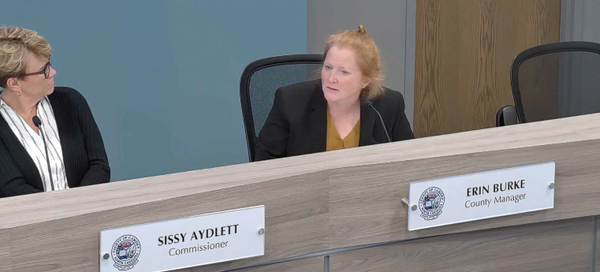
B&M schedules mining-permit meeting; Camden says no application is on file
B&M’s September 23 meeting concerns a proposed mining permit at 399 Ponderosa Drive. Camden says no application is on file; attendance questions remain.
Camden Told B&M It Was Expected to Follow Mine Permit; Residents Still Await Enforcement Answers
Ponderosa Road residents continue reporting mine conditions while Camden County has yet to explain what enforcement process remains available during B&M’s appeal.
Camden added to $150,000 youth grant program for first time
CAMDEN COUNTY, N.C. — Organizations serving Camden County youth will have access to a regional grant program for the first time this fall, with about $150,000 expected to be awarded across four northeastern North Carolina counties. The HCWGMW Endowment, administered by the North Carolina Community Foundation, will accept applications beginning Sept. 11. Grants typically range from $5,000 to $30,000. Camden and Gates counties are new to the program this year. In previous years, applications
Rural health care has to change. Eastern N.C. can show the nation how.
ECU Health CEO Dr. Michael Waldrum says rural health care must look different, and that eastern North Carolina, starting with Martin County’s planned Rural Emergency Hospital, can show other regions what comes next.
Camden's Water and Sewer Warnings Span 20 Years. Commissioners Just Approved Another Three-Year Moratorium.
Camden's 2012 plan said wastewater capacity was already spoken for. Commissioners approved 36 more months, even as staff cited four years to finish a wastewater plant.
The Voters Have Spoken. We Should Stay Home.
Rep. Rodney D. Pierce, D-Halifax, argues that North Carolina’s outgoing Republican legislative majority should not use this month’s lame-duck session to reshape state government before newly elected legislators take office.