The Voters Have Spoken. We Should Stay Home.
Rep. Rodney D. Pierce, D-Halifax, argues that North Carolina’s outgoing Republican legislative majority should not use this month’s lame-duck session to reshape state government before newly elected legislators take office.
This audio narration was generated by Camden Tribune using the open-source Kokoro speech model.
Guest Opinion
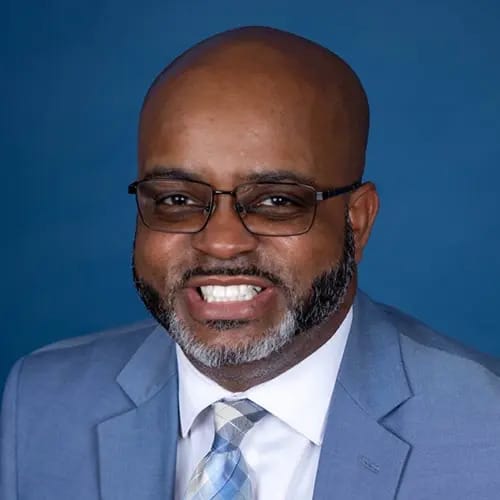
By Rep. Rodney D. Pierce (D–House District 27)
North Carolina voters sent a clear message to the state’s Republican legislative leaders on November 3. The upcoming lame-duck session will show whether they listened.
Lame-duck sessions occur when lawmakers return to Raleigh after an election, but before newly elected legislators take office in January. They allow outgoing lawmakers to make major decisions while they still hold power, potentially limiting what incoming lawmakers can change.
North Carolina has seen this play out before. In 2010, when Democrats last controlled the General Assembly, they adjourned in July and did not return before Republicans took control in January 2011. Republicans, by contrast, have repeatedly used lame-duck sessions to reshape state government after elections shifted the balance of power.
In 2016, after voters elected Democrat Roy Cooper governor, Republican lawmakers used a lame-duck legislative session to restrict the authority of outgoing Republican Gov. Pat McCrory’s successor before Cooper took office. They changed the appointment process for the Industrial Commission, a state workers’ compensation body, allowing McCrory to make an appointment before leaving office and restructuring the commission’s leadership. Republicans also stripped the governor of appointment authority over UNC university boards of trustees and changed the structure and control of the State Board of Elections. The courts later struck down the elections board changes as unconstitutional.
In 2018, after Republicans lost their legislative supermajorities in the House and Senate, they used their remaining veto-proof majority to override Cooper’s vetoes, including legislation requiring voter ID and measures changing the structure of state elections and ethics boards.
Then, in 2024, Republicans again moved to limit the authority of incoming Democratic leaders before they took office. They transferred control of state and local elections board appointments from the governor to the Republican state auditor, rewrote absentee voting rules, restricted the governor’s judicial appointment authority, and weakened the incoming Democratic attorney general’s powers. They also restructured the Utilities Commission, reducing the governor’s appointments from three to two and transferring the authority to select the chair of the commission from the governor to the commission itself.
The pattern is clear: When voters shift the balance of power, Republican lawmakers have repeatedly used lame-duck sessions to change control of state agencies, elections and appointments before newly elected officials take office.
This year, according to unofficial results, voters flipped more than 20 Republican-held House seats, giving Democrats a majority, and ended the Republicans’ Senate supermajority. They signaled a desire for a different direction in state government. As Gov. Stein said the day after the election, voters had spoken “pretty dadgum loud” about who they wanted making decisions for them.
Yet Republican legislative leaders plan to return to Raleigh November 16–19, with additional sessions possible between November 30 and December 18. Given their history, North Carolinians have reason to pay attention.
Republicans have also reportedly discussed restricting the Wake County District Attorney’s authority to investigate and prosecute potential public corruption involving state officials and legislators, according to Senate Minority Leader Sydney Batch, although no definitive proposal has been introduced.
Other possibilities include overriding Gov. Stein’s remaining vetoes, including Senate Bill 50, allowing 18-year-olds to carry concealed handguns without a permit or safety training; House Bill 171, banning DEI programs in state agencies; House Bill 958, shortening early voting for primaries and runoffs; and House Bill 377, expanding the chief justice’s authority to suspend certain judges without pay while under investigation.
Republicans have also explored dividing North Carolina’s largest school districts, including Charlotte-Mecklenburg Schools and Wake County Schools.
That concern became more immediate this week, with reporting that Republican Rep. David Willis of Union County plans to introduce legislation that would break up Charlotte-Mecklenburg Schools into smaller districts and force new school board elections, according to two CMS board members contacted by his staff.
Such changes could reshape local control, school funding and public education for generations.
Lawmakers could also further change election laws or spend state reserves, which Sen. Batch has said she has heard discussed.
These are not routine legislative decisions. They could reshape state government and limit the authority of the very officials North Carolina voters just elected.
Elections have consequences, and the peaceful transfer of power is fundamental to our democracy. Voters have made their choice. The outgoing majority should respect it, put North Carolina ahead of partisan advantage, and step aside so the newly elected legislature can govern. That is what our democracy demands and what the people of this state deserve.
Editor’s Note
Election results cited in this commentary remain unofficial as of November 11, 2026. North Carolina county boards of elections are scheduled to conduct canvasses on November 13, with the State Board canvass scheduled for November 24 for contests within its jurisdiction.
Transparency Disclosure
Camden Tribune Publisher Francisco Salmeron is the Republican commissioner-elect for the Camden County Board of Commissioners.
Rep. Rodney Pierce’s guest commentary was submitted directly to the Camden Tribune. The Tribune reviewed factual assertions in the submission before publication and requested clarification or supporting information where necessary.
That review did not alter Rep. Pierce’s political viewpoint, argument or conclusions.
This commentary is published as guest opinion and does not represent the editorial position of the Camden Tribune. Salmeron’s elected position is disclosed so readers have that context and can distinguish his public role from the Tribune’s independent news and opinion publishing.
Written by
Continue following this story
More Guest Opinion coverage
Rural health care has to change. Eastern N.C. can show the nation how.
ECU Health CEO Dr. Michael Waldrum says rural health care must look different, and that eastern North Carolina, starting with Martin County’s planned Rural Emergency Hospital, can show other regions what comes next.
Camden's Water and Sewer Warnings Span 20 Years. Commissioners Just Approved Another Three-Year Moratorium.
Camden's 2012 plan said wastewater capacity was already spoken for. Commissioners approved 36 more months, even as staff cited four years to finish a wastewater plant.
Veterans Day in Camden: A Heartfelt Thank You
Today, Camden County says thank you to every veteran who served our nation, came home, and continued serving their families, neighbors, and community.