Camden Board Backs Posting Delinquent Taxpayer Names on Social Media for ‘Extra Pressure’
Camden commissioners backed posting delinquent-tax information on county social media after the county manager said broader exposure could add “a little extra pressure” to pay.

This audio narration was generated by Camden Tribune using the open-source Kokoro speech model.
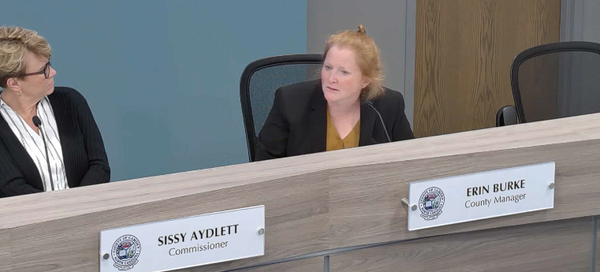
CAMDEN, N.C. — Camden County commissioners gave staff the go-ahead Sept. 8 to expand publication of delinquent taxpayers' names to county websites and social-media pages after County Manager Erin Burke said the added exposure might put “a little extra pressure on folks” to pay.
The county already publishes certain delinquent-tax information through collection procedures established under North Carolina law. Burke's proposal would broaden that exposure beyond the newspaper and place the information on government-controlled digital platforms.
“We advertise those things in the newspaper,” Burke told commissioners, “but I don't know how many folks are actually reading the newspaper.”
She proposed putting the information on the county website and sharing it through social media “just to make sure that those names are out there.”
Burke then pointed to outstanding tax bills of roughly $6,000 and compared one with a $6,275 replacement plotter commissioners had approved earlier in the meeting.
“That person's unpaid taxes could have purchased that new plotter,” Burke said.
She praised the Tax Department's collection work but said wider publication might provide additional leverage.
“It might be a little extra pressure on folks if their names are not just in the newspaper,” Burke said, adding that the taxes might “pay a little faster that way.”
Commissioners expressed support.
One commissioner suggested the county first announce on Facebook that the practice was coming so taxpayers could not say they had received no warning. Burke responded that delinquent taxpayers already receive calls and letters from the Tax Department.
She then asked whether the Board had reached consensus.
“I don't think I need a motion,” Burke said.
The discussion ended without a formal vote on the proposal.
Tax Administrator Lisa Anderson had earlier reported a 97.67% collection rate for 2025 taxes. The Tax Department had sent 31 delinquent notices and carried out three wage garnishments and four bank garnishments during the reporting period.
State law already sets a publication process
North Carolina General Statute §105-369 establishes how counties advertise unpaid taxes that constitute liens on real property.
After the governing board orders the liens advertised, the tax collector must mail the record owner notice at least 30 days before publication. The notice must state the principal amount owed and tell the owner that his or her name will appear in a newspaper advertisement if the taxes remain unpaid.
The statute then requires the county tax collector to post notice of the liens at the courthouse and publish each lien at least once in a newspaper of general circulation.
The advertisement must identify the record owner, briefly describe the property and state the principal amount of taxes constituting the lien.
The law also addresses payment during the advertising period. Once the required amount is paid, the tax collector is to remove that parcel from subsequent advertisements.
A tax collector or deputy who willfully advertises a lien while knowing the property is not taxable or knowing the advertised taxes have already been paid can face a Class 3 misdemeanor and liability for damages.
Section 105-369 does not specifically refer to Facebook, Instagram or other social-media platforms.
That omission does not by itself establish that additional online publication is prohibited. It also does not, by itself, answer what authority or procedures govern the broader distribution contemplated by Camden officials.
Another North Carolina statute provides that counties may administer taxes they are authorized to impose in a manner “not inconsistent” with the statute authorizing the tax.
The practical question is whether distributing delinquent-tax information through county social-media accounts is another method of administering existing tax-collection authority or whether additional procedures are warranted when the wider exposure is being used specifically to encourage payment.
Other counties publish delinquent taxes online
Online publication of delinquent-tax information is not unique to Camden.
Neighboring Pasquotank County links a delinquent-tax publication directly from its Tax Office website. Its current publication lists property owners, parcel references and outstanding amounts.
Mecklenburg County maintains a monthly Top 100 Delinquent Taxpayer List as well as delinquent individual and business taxpayer publications. Mecklenburg says changes in status, including payment in full, active appeals or bankruptcy, are reflected in subsequent lists.
Those examples show that North Carolina counties already make delinquency information available online.
Camden's Sept. 8 discussion included another element: county officials specifically connected wider publication with putting additional pressure on taxpayers to pay.
Virginia provides a useful statutory contrast. Its law expressly allows certain delinquent-tax lists to be published in a newspaper or made available on a locality's Internet site.
North Carolina's §105-369 contains no comparable express reference to Internet publication.
Scope and safeguards were not established
The Sept. 8 discussion did not establish exactly whose names would be posted.
Burke referred to difficulty collecting from some of the county's “top 10 or top 30 unpaid,” but commissioners did not adopt written criteria defining whether social-media publication would apply to every delinquent account or only selected taxpayers.
The discussion also did not establish whether the proposal would be limited to real-property tax liens covered by §105-369 or extend to personal-property or business tax debts.
No public procedure was adopted for verifying balances immediately before publication, providing taxpayers specific notice of social-media distribution, handling appeals or bankruptcies, correcting errors or removing information after payment.
Those details take on added importance on social media. A county can remove its original post, but screenshots, shares and third-party copies can remain after the underlying debt has been paid.
North Carolina law requires paid parcels to be removed from subsequent statutory advertisements. Section 105-369 does not address copies of tax information already distributed through social-media channels.
What Happens Next
County staff left the Sept. 8 meeting with consensus from commissioners to move forward, but the public discussion did not establish an implementation date or adopt a separate ordinance, resolution or written publication policy.
The remaining questions include which accounts will be published, what notice taxpayers will receive, what authority the county relies upon for the additional distribution and what safeguards will govern verification, disputes, corrections and removal after payment.
Sources
- N.C. General Statute §105-369 — Advertisement of tax liens on real property for failure to pay taxes
- N.C. General Statute §153A-146 — General power to impose taxes
- Camden County — Sept. 8, 2026 Board of Commissioners meeting calendar
- Camden County Tax Department
- Camden County Administration
- Pasquotank County Tax Office
- Pasquotank County — Current Delinquent Taxes PDF
- Mecklenburg County Office of Tax Administration — Delinquent Taxpayer Lists
- Virginia Code §58.1-3924 — Publication of delinquent local tax lists
Related Camden Tribune Coverage
Written by
Continue following this story
More Government Watch coverage
Sawyer Says South Mills Development Could ‘Outrun’ Sewer Plant as Moratorium Nears End
South Mills wastewater averaged about 25% of stated capacity in July, while Camden says proposed development will require substantially more treatment capacity.
Camden’s 30-Month Moratorium Nears End. DEQ Is Still Waiting on the Wastewater Model
Camden imposed a 30-month development moratorium to address water and sewer capacity. With four months left, DEQ says no wastewater permit application exists and it is still waiting on the completed model.
County rosters place the same six people on both Camden land-use boards
Camden’s two principal land-use boards have different duties but share six of seven members. A pending appeal shows why the distinction matters.
B&M schedules mining-permit meeting; Camden says no application is on file
B&M’s September 23 meeting concerns a proposed mining permit at 399 Ponderosa Drive. Camden says no application is on file; attendance questions remain.
Sawyer Says South Mills Development Could ‘Outrun’ Sewer Plant as Moratorium Nears End
South Mills wastewater averaged about 25% of stated capacity in July, while Camden says proposed development will require substantially more treatment capacity.
‘‘Any and All Residential Growth’: What Camden’s August 31 Hearing Revealed
Camden's 387-unit appeal has exposed conflicting readings of the county UDO, a rushed May determination and questions that can affect any property owner.