Camden Wastewater Project Still Awaiting Permits More Than a Year After Moratorium Began
More than a year after Camden County imposed a subdivision moratorium citing infrastructure limits, officials say the wastewater project needed to move forward still requires additional permits before bidding can begin.

This audio narration was generated by Camden Tribune using the open-source Kokoro speech model.
Quick Take
- Camden County adopted a 30-month subdivision moratorium in June 2024 after officials cited limited water and wastewater treatment capacity.
- At the July 6, 2026, Board of Commissioners meeting, Chass Sawyer said there was “not a whole lot going on still with the new wastewater plant.”
- Sawyer said project modeling had been submitted for review, but the county still needs additional state permits before the work can be advertised for construction bids.
- County planning documents had warned about sewer-related growth constraints years before the moratorium was adopted.
- A 2016 capital project ordinance budgeted approximately $2.75 million for a new wastewater treatment plant and anticipated completion by 2018.
- Developers and a landowner filed a federal lawsuit in May challenging the moratorium and related county permitting decisions.
More Than a Routine Project Update
CAMDEN, N.C. — More than a year after Camden County restricted new subdivision development because of limited water and wastewater infrastructure, the project presented as part of the solution still has not reached construction bidding.
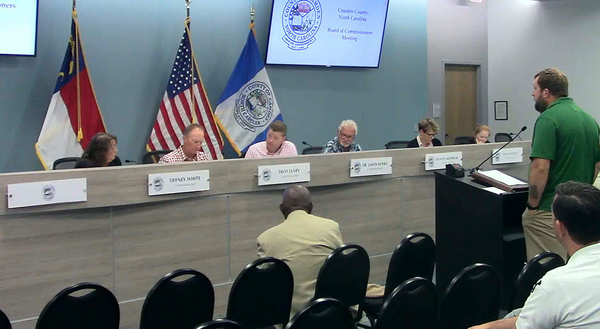
During the Camden County Board of Commissioners’ July 6 meeting, Chass Sawyer delivered what was described as the latest subdivision moratorium update.
“There’s not a whole lot going on still with the new wastewater plant,” Sawyer told commissioners.
He said project modeling had been submitted for final review and described the prospects for obtaining a National Pollutant Discharge Elimination System permit as “promising.” However, he also said the county still needed “a couple more permits” before the project could be advertised for bids.
Sawyer said state officials had described the permitting path as a 24-month process. He expressed hope that bids could be brought before commissioners “in a few months.”
For residents, landowners, builders and businesses affected by the moratorium, the update means the county has not yet reached the point where contractors can submit construction prices, commissioners can award a contract or a firm construction schedule can begin.
Why This Matters
The subdivision moratorium is not simply a planning document or a temporary procedural pause.
It restricts development activity across Camden County and affects property owners, builders, housing availability, business investment and the county’s future tax base.
When the county adopted the moratorium, officials said existing water and wastewater infrastructure could not support continued subdivision growth. The moratorium was presented as a period during which the county could address infrastructure limitations and revise its development rules.
More than a year later, the wastewater project has not reached bidding, and the county has not publicly established a firm date for construction to begin or a clear set of measurable conditions that would allow the moratorium to end early.
The issue has also reached federal court, demonstrating that frustration over the restrictions is not limited to political disagreement at county meetings.
Accountability Context: The Problem Did Not Begin in 2024
Camden County’s water and wastewater concerns did not suddenly appear when commissioners adopted the moratorium.
The county’s own records show that infrastructure limitations and their effect on development have been discussed for years.
Camden County’s public-works website states that the county sewer system began operating in 2008 and serves a limited corridor. The county describes the existing wastewater treatment plant as having a permitted capacity of 100,000 gallons per day.
By 2012, county planning documents were already warning that sewer capacity could become a significant barrier to new development.
The county’s Development Capacity and Alternative Development Scenarios Report said additional sewer capacity identified in an earlier master plan would be consumed by planned development.
The report called sewer capacity a “considerable constraint” and also warned that future growth could require additional water-treatment capacity, storage and new wells.
A separate South Mills Small Area Plan described sanitary sewer as a potential “game changer” for the community’s economic-development prospects.
The plan connected sewer availability with new business opportunities, residential development, infill and the ability to create a denser village center.
Taken together, those records show that Camden County had identified infrastructure as a growth constraint more than a decade before the moratorium was adopted.
A $2.75 Million Wastewater Project Was Approved in 2016
In May 2016, Camden County adopted a capital project ordinance for what it called the Camden Core Wastewater Treatment Plant Project.
The 2016 project ordinance budgeted approximately $2.75 million through a combination of grant funding, economic-development funding and county contributions.
The ordinance anticipated that the project would be completed by 2018.
The July 2026 meeting update did not explain whether the wastewater plant now awaiting permits is the same project approved in 2016, a later phase of that project or a substantially redesigned replacement.
That distinction matters because residents deserve a clear accounting of what was planned, what was built, what public money was spent and why the county reached 2024 with infrastructure limitations serious enough to justify a 30-month development restriction.
What Is the Actual Infrastructure Constraint?
The county’s publicly available information leaves an important question unanswered.
Camden County’s wastewater webpage states that the existing plant has a permitted capacity of 100,000 gallons per day and reports average flow below that figure.
That does not necessarily mean the county has unrestricted capacity for subdivision development.
The actual constraint may involve the geographic limits of the sewer service area, collection lines, pump stations, storage, spray fields, discharge permitting, future committed flows, septic suitability, water production, elevated storage or a combination of those factors.
However, county officials have not yet provided the public with one clear document identifying the binding infrastructure limitation, the capacity currently available, the capacity already committed and the exact improvement required before additional subdivision growth can resume.
That information is essential if residents are to understand why development is restricted and whether the proposed infrastructure project will actually solve the problem.
The Moratorium and Its Consequences
Camden County commissioners adopted the 30-month subdivision moratorium on June 25, 2024, citing limited water and wastewater treatment capacity.
The moratorium is scheduled to remain in effect through Dec. 25, 2026, unless commissioners modify or end it sooner.
During that period, affected property owners and businesses have faced uncertainty over whether projects can proceed, which utility requirements apply and when normal subdivision approvals may resume.
The financial consequences are not theoretical. Developers and a landowner have taken the dispute to federal court.
Federal Lawsuit Raises the Stakes
As previously reported by Camden Tribune, multiple developers and a Currituck County landowner filed a federal lawsuit against Camden County and several county officials on May 22, 2026.
The lawsuit challenges the legality of the moratorium and alleges that county officials reversed earlier permitting positions after private parties relied on county guidance when advancing development projects.
The case was filed in the U.S. District Court for the Eastern District of North Carolina under case number 2:26-cv-00025-M-RN.
The reported claims include requests for declaratory judgments, a substantive due-process claim, an alleged breach of a settlement agreement and a federal civil-rights claim under 42 U.S.C. § 1983.
Those claims remain allegations. The filing of a lawsuit does not establish that Camden County or any named official violated the law.
However, the case demonstrates the level of frustration among parties that say the moratorium and subsequent permitting decisions have harmed their projects and investments.
Read Camden Tribune’s full report on the federal lawsuit.
What Officials Did Not Provide July 6
The July 6 moratorium update did not include several pieces of information residents would need to evaluate the project’s progress fully.
- An updated total project budget.
- A current construction-cost estimate.
- A list of every permit still outstanding.
- The dates those permit applications were submitted.
- Copies of state review comments or requests for changes.
- A detailed engineering schedule.
- A construction start date.
- An estimated completion date.
- The exact capacity the project will add.
- The specific conditions required before commissioners can lift the moratorium.
Without those details, the public is left with a general expectation that bids may return in several months rather than a verifiable project schedule.
A Separate Nearly $1 Million Comment Did Not Concern the Moratorium Project
Later in the July 6 meeting, county staff discussed an original bid that had been “just shy of a million dollars.”
That comment did not refer to the wastewater project connected to the subdivision moratorium.
It concerned a separate Well No. 4 project. The Board later approved a $315,000 contract for remaining work associated with that well.
Keeping the two projects separate is important because the transcript did not provide a current construction estimate for the moratorium-related wastewater project.
How We Got Here
- 2008: Camden County says its sewer system began operating and serving a limited county corridor.
- 2012: County planning records warn that sewer capacity could constrain growth and that additional water infrastructure may be needed.
- 2012: The South Mills Small Area Plan describes sewer service as a possible “game changer” for economic development.
- 2016: Commissioners approve a roughly $2.75 million wastewater-treatment capital project ordinance, with completion anticipated by 2018.
- June 25, 2024: Commissioners adopt a 30-month subdivision moratorium citing limited water and wastewater treatment capacity.
- 2025: Disputes emerge over whether specific projects can rely on septic systems or must connect to sewer infrastructure.
- February 2026: The county and one developer reportedly settle an administrative appeal involving development-plan review.
- May 22, 2026: Developers and a landowner file a federal lawsuit challenging the moratorium and related permitting decisions.
- July 6, 2026: County staff report that the wastewater project still needs additional permits before bidding can begin.
What Residents Need to Know
The latest update does not mean the wastewater project has stopped.
County staff reported that modeling had been submitted for review and that the outlook for a key discharge permit appeared promising.
But the project is still before construction bidding, contract award and construction.
That distinction matters because permit progress does not provide the same certainty as an awarded contract, a funded construction schedule or a completion date.
Residents should watch for whether the county releases:
- The remaining permit applications and approval dates.
- An updated cost estimate.
- The expected additional treatment capacity.
- A bidding date.
- A construction schedule.
- Written criteria for ending the moratorium.
Why Residents and Businesses Are Frustrated
The frustration surrounding the moratorium is rooted in more than impatience with a single permit application.
County records show that infrastructure constraints were recognized years ago. Public money was committed to wastewater improvements. Planning documents linked sewer access to economic development. Yet Camden County ultimately restricted development in 2024 because officials said the necessary infrastructure was still insufficient.
For residents and businesses investing in Camden County, the concern is therefore not merely that a project is taking time.
The concern is that a long-recognized infrastructure problem remains unresolved while property use, development plans, housing construction and private investment are restricted.
The federal lawsuit now places some of those consequences before a judge, but the broader policy question remains with county government: what is Camden County’s measurable plan for resolving the infrastructure problem and ending the moratorium?
What Happens Next
County staff said the wastewater project must receive additional state permits before it can be advertised for bids.
If permits are issued, commissioners would then be asked to review contractor bids, determine how the project will be funded and decide whether to award a construction contract.
Camden Tribune will request:
- All outstanding wastewater permit applications.
- The dates each application was submitted.
- State agency correspondence and review comments.
- The latest engineering schedule and critical path.
- The current capital budget and project cost estimate.
- Records explaining how the current project relates to the 2016 wastewater capital ordinance.
- The county’s written criteria for lifting the subdivision moratorium.
Until those records are released, the central accountability question remains unresolved: Camden County restricted subdivision growth because infrastructure was inadequate, but the project intended to address that limitation still has not reached construction bidding.
Official Documents and Sources
- Camden County Waste Water Treatment Plant information
- Development Capacity and Alternative Development Scenarios Report
- South Mills Small Area Plan
- 2016 Camden Core Wastewater Treatment Plant Project Ordinance
- Camden County Agendas and Minutes
- Camden County Board of Commissioners video archive
Continue Following This Story
Developers Sue Camden County Over Building Moratorium, Permit Reversals
Developers and a landowner allege that Camden County unlawfully adopted the moratorium and reversed earlier permitting decisions after private parties relied on county guidance.
More Camden County Coverage
Follow Camden Tribune’s reporting on county government, growth, infrastructure, public records and development.
Government Watch
Read accountability reporting on public spending, county decisions, development and taxpayer issues across northeastern North Carolina.
Transparency Note
This report is based on Camden County planning documents, public infrastructure records, the July 6 Board of Commissioners meeting transcript and Camden Tribune’s previous reporting.
The relationship between the wastewater project discussed in July 2026 and the capital project approved in 2016 has not yet been confirmed by Camden County. Camden Tribune is requesting records to clarify whether the projects are the same, related phases or separate infrastructure plans.
About Camden Tribune
Camden Tribune is an independent digital newsroom covering local government, public safety, courts, schools, development, business and public accountability in Camden County and northeastern North Carolina.
We rely on primary documents, explain the local consequences of government decisions and update stories as additional records become available.
Written by
Continue following this story
More Camden County coverage
Camden County Moves Forward on Recreation and Senior Center Planning, but How Will It Be Paid For?
Commissioners approved the first step toward developing a future Parks & Recreation and Senior Center, but major questions surrounding construction costs, long-term funding, and future operating expenses remain unanswered. By Francisco Salmeron Publisher & Editor-in-Chief | Camden Tribune Published: July 2026 Quick Take * Camden County commissioners unanimously approved moving forward with a Request for Qualifications (RFQ) to begin planning and engineering for a proposed Parks & RecreatioB&M schedules mining-permit meeting; Camden says no application is on file
B&M’s September 23 meeting concerns a proposed mining permit at 399 Ponderosa Drive. Camden says no application is on file; attendance questions remain.
‘‘Any and All Residential Growth’: What Camden’s August 31 Hearing Revealed
Camden's 387-unit appeal has exposed conflicting readings of the county UDO, a rushed May determination and questions that can affect any property owner.
Camden Told B&M It Was Expected to Follow Mine Permit; Residents Still Await Enforcement Answers
Ponderosa Road residents continue reporting mine conditions while Camden County has yet to explain what enforcement process remains available during B&M’s appeal.
B&M schedules mining-permit meeting; Camden says no application is on file
B&M’s September 23 meeting concerns a proposed mining permit at 399 Ponderosa Drive. Camden says no application is on file; attendance questions remain.
Sawyer Says South Mills Development Could ‘Outrun’ Sewer Plant as Moratorium Nears End
South Mills wastewater averaged about 25% of stated capacity in July, while Camden says proposed development will require substantially more treatment capacity.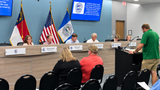
Camden Board Backs Posting Delinquent Taxpayer Names on Social Media for ‘Extra Pressure’
Camden commissioners backed posting delinquent-tax information on county social media after the county manager said broader exposure could add “a little extra pressure” to pay.