When must drivers stop for a school bus in North Carolina? The five road rules
North Carolina’s school bus stop law varies by road. Here is who must stop in five common traffic configurations.

This audio narration was generated by Camden Tribune using the open-source Kokoro speech model.
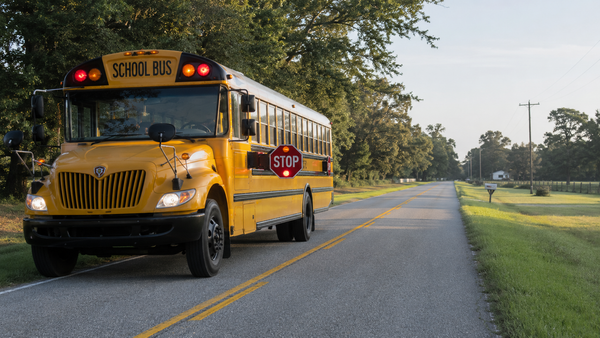
Quick Take
- Traffic in both directions must stop on a two-lane road, a two-lane road with a center turn lane, and an undivided four-lane road.
- On a road with at least four travel lanes and a center turn lane, only traffic following the bus must stop.
- On a divided highway with a median, only traffic traveling on the bus’s side of the median must stop.
- Flashing yellow lights mean slow down and prepare to stop. Flashing red lights or the bus’s mechanical stop signal require a full stop.
School-bus rules at a glance
- Yellow flashing lights: Slow down and prepare to stop.
- Red flashing lights or mechanical stop signal: Stop and remain stopped.
- Move again only when: The stop signal is withdrawn, the red lights are off, and the bus has started moving.
- Base violation: A Class 1 misdemeanor with a minimum $500 fine.
CAMDEN, N.C. — With school buses returning to roads in Camden County and across North Carolina, drivers need to know that the state’s stop requirement changes with the design of the road, not simply with the direction from which a vehicle approaches.
Under North Carolina General Statute 20-217, a driver approaching a properly marked school bus must come to a full stop when the bus is stopped to receive or discharge passengers and is displaying flashing red lights or its mechanical stop signal. Unless a divided-roadway exception applies, the requirement covers vehicles approaching from either direction.
Who must stop in each road configuration?
The N.C. Division of Motor Vehicles school-bus stop-law guide illustrates five common roadway layouts:
- Two-lane road: Traffic in both directions must stop.
- Four-lane road without a median: Traffic in both directions must stop.
- Two-lane road with a center turn lane: Traffic in both directions must stop.
- Road with four or more travel lanes and a center turn lane: Only traffic following the bus must stop. Oncoming traffic may continue with caution.
- Divided highway with a median: Only traffic on the bus’s side of the median must stop. Traffic traveling in the opposite roadway may continue with caution.
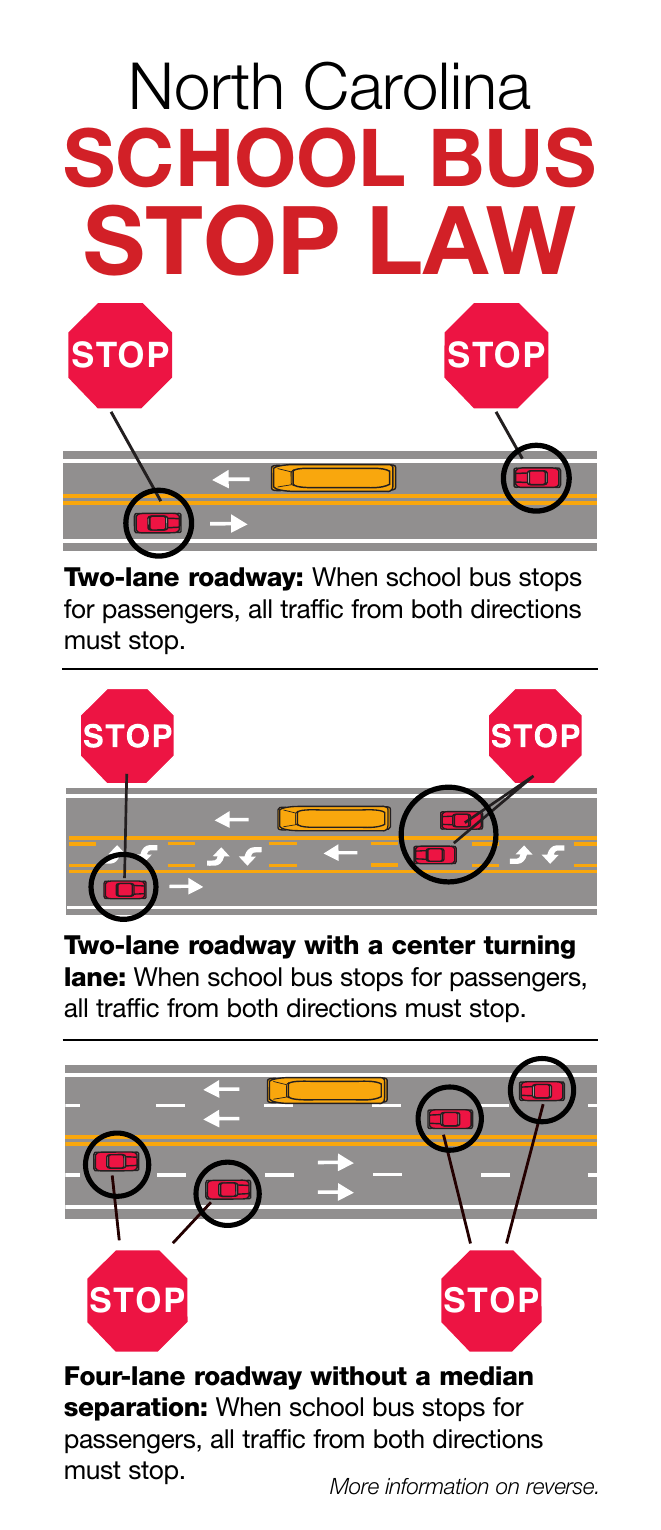
Traffic in both directions must stop on a two-lane road, a four-lane road without a median, and a two-lane road with a center turn lane. Graphic: N.C. Division of Motor Vehicles
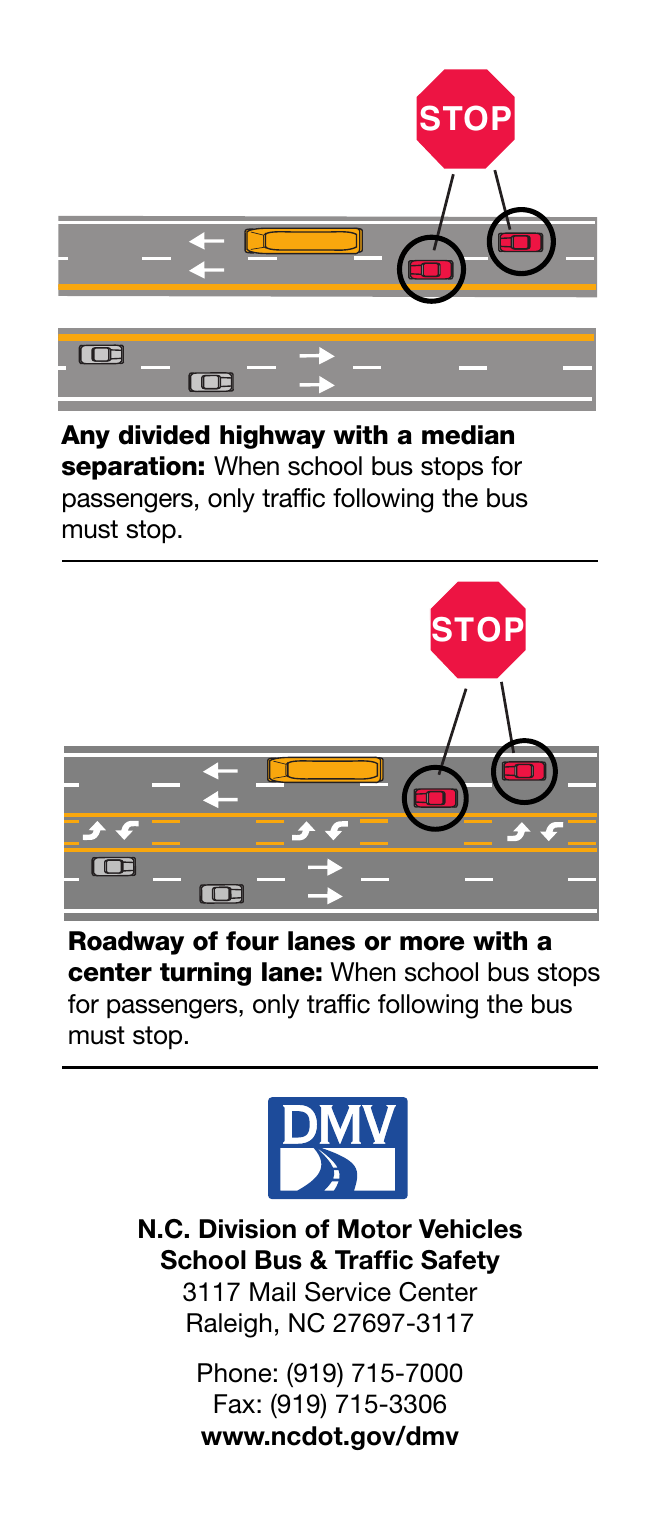
On a road with at least four travel lanes and a center turn lane, or on a divided highway with a median, only traffic following the bus must stop. Graphic: N.C. Division of Motor Vehicles
A painted center line by itself does not create the divided-roadway exception. A center turn lane changes the rule only when the road has at least four travel lanes in addition to the turn lane. On a two-lane road with a center turn lane, traffic in both directions still must stop.
What the bus lights mean
Flashing yellow lights mean the bus is preparing to stop to load or unload students. The N.C. Department of Transportation tells drivers to slow down and prepare to stop.
When the red lights flash, or the mechanical stop signal is displayed, drivers who are required to stop must bring their vehicles to a full stop before passing or attempting to pass the bus.
State law does not establish a universal stopping distance in feet. The legal requirement is to stop before passing the bus and remain stopped.
A stopped driver may not proceed until the mechanical stop signal has been withdrawn, the red lights have been turned off, and the bus has started moving. Drivers should look carefully for children before proceeding, even after the bus completes that sequence.
Violations carry criminal penalties
A violation of North Carolina’s school-bus stop law is a Class 1 misdemeanor and carries a minimum $500 fine.
A person who willfully violates the law and strikes someone commits a Class I felony with a minimum $1,250 fine. If the collision causes a death, the offense is a Class H felony with a minimum $2,500 fine.
The statute also provides for driver’s-license revocation following repeat misdemeanor convictions and felony convictions. Photographs and video captured by automated school-bus safety cameras may be admitted as evidence when they comply with the North Carolina Rules of Evidence.
Why It Matters
Children may cross a traffic lane while boarding or leaving a school bus. A driver’s mistake about a center turn lane or median can put a child directly in the path of a moving vehicle.
Knowing the five roadway configurations before encountering a stopped bus helps drivers make the correct decision without hesitation.
What Happens Next
Drivers should expect buses, students, and changing traffic patterns as local schools reopen. Families can review the Camden County Schools calendar, while drivers should allow additional travel time during morning pickup and afternoon dismissal periods.
Sources: North Carolina General Statute 20-217; NCDOT School Bus Safety; N.C. DMV School Bus Stop Law guide; and Camden County Schools calendar.
This report provides general public-safety information and is not legal advice.
Written by
Continue following this story
More Public Safety coverage
B&M schedules mining-permit meeting; Camden says no application is on file
B&M’s September 23 meeting concerns a proposed mining permit at 399 Ponderosa Drive. Camden says no application is on file; attendance questions remain.
Sawyer Says South Mills Development Could ‘Outrun’ Sewer Plant as Moratorium Nears End
South Mills wastewater averaged about 25% of stated capacity in July, while Camden says proposed development will require substantially more treatment capacity.
Camden Board Backs Posting Delinquent Taxpayer Names on Social Media for ‘Extra Pressure’
Camden commissioners backed posting delinquent-tax information on county social media after the county manager said broader exposure could add “a little extra pressure” to pay.