Can You Legally Operate an Airbnb in Camden County? Here’s What the UDO Says
Is Airbnb illegal in Camden County? The answer depends on the property’s zoning, whether the owner lives there and whether guests stay for less than 30 days.

This audio narration was generated by Camden Tribune using the open-source Kokoro speech model.

Camden Tribune Explains
Quick Answer
No. Airbnb is not automatically illegal everywhere in Camden County.
However, that does not mean every house can legally be rented to visitors for a few nights at a time.
The answer depends on several things:
- The zoning district where the property is located.
- Whether guests stay for less than 30 days.
- Whether the owner lives in the house.
- Whether the owner rents individual rooms or the entire home.
- How Camden County classifies the proposed use under its Unified Development Ordinance.
The simplest explanation is this:
Some short-term rentals may be allowed. Others may require special approval. Many whole-house Airbnbs in ordinary residential zoning districts may not be allowed under the current UDO.
Why Residents Are Confused
Many Camden County residents have heard some version of this statement:
“Airbnb is against the UDO.”
That statement is too broad.
The Camden County Unified Development Ordinance does not appear to list “Airbnb” as its own land-use category. It also does not clearly list “short-term rental” or “vacation rental” as a separate use.
Airbnb is only a website that connects property owners with guests. The zoning question is not which website a person uses.
The real question is:
How is the property being used?
The 30-Day Difference
One of the most important distinctions in the UDO is the length of the guest’s stay.
Stays of 30 days or longer
Think about a person who rents a house for six months or signs a month-to-month lease.
That looks like ordinary residential living. The person is treating the property as a temporary home.
Stays of less than 30 days
Now think about a family that rents a house for three nights.
They leave on Sunday, and another family rents it the following weekend.
That looks more like lodging for visitors than ordinary residential living.
Under the UDO, lodging offered for stays of less than 30 days may be treated as a form of visitor accommodation rather than normal household living.
Think of It Like a Hotel Versus an Apartment
An apartment tenant usually lives in one place for a month or longer.
A hotel guest usually stays for a few nights.
Both people sleep in a building, but the property is being used in two different ways.
Camden County’s UDO makes a similar distinction. A house does not necessarily remain an ordinary residential use simply because the building still looks like a house.
How often people come and go, how long they stay and whether the owner lives there can change how the use is classified.
Example One: The Owner Lives in the House
Imagine that a homeowner lives in a four-bedroom house.
The owner rents one bedroom to visitors for a few nights, but continues living in the home.
This type of operation most closely resembles what the UDO calls a bed-and-breakfast.
A bed-and-breakfast is not allowed in every zoning district. Where it is permitted, the operator must also meet specific rules.
Those rules generally include:
- The building must be designed and used as a single-family detached dwelling.
- The business must be operated primarily by people who live in the house.
- No more than the equivalent of one full-time outside employee may assist.
- Guest rooms may not be placed in detached accessory buildings.
- At least one parking space must be provided for each sleeping room.
- The property may have only one kitchen.
- Meals must be limited to overnight guests.
- Signs must follow the UDO’s sign standards.
The owner-occupancy requirement is especially important. The UDO does not appear to describe a bed-and-breakfast as a home that the owner leaves entirely to short-term guests.
Where May a Bed-and-Breakfast Be Allowed?
The answer depends on the zoning district.
| Zoning district | Bed-and-breakfast status |
|---|---|
| Working Lands — WL | Permitted by right, subject to applicable standards |
| Village Residential — VR | Special Use Permit required |
| Crossroads Commercial — CC | Permitted by right |
| Village Commercial — VC | Permitted by right |
| Mixed-Use — MX | Permitted by right |
| Planned Development — PD | Only when included in the approved development documents |
| Conservation — CP | Prohibited |
| Rural Residential — RR | Prohibited |
| Suburban Residential — SR | Prohibited |
| Neighborhood Residential — NR | Prohibited |
| Highway Commercial — HC | Prohibited as a bed-and-breakfast |
| Maritime Commercial — MC | Prohibited as a bed-and-breakfast |
| Light Industrial — LI | Prohibited |
| Heavy Industrial — HI | Prohibited |
“Permitted by right” does not mean that no rules apply. It means the use may be allowed without a Special Use Permit when the applicant meets all zoning, parking, building, septic and other applicable requirements.
Example Two: The Owner Rents the Entire House
Now imagine a different situation.
A person owns a second home but does not live there. The owner rents the entire house to different guests every weekend.
This is the type of Airbnb that creates the most uncertainty under Camden County’s current UDO.
It may not qualify as a bed-and-breakfast because:
- The owner does not live in the house.
- The entire dwelling is being rented instead of individual guest rooms.
- The property is being used repeatedly for transient lodging.
The UDO does not appear to contain a separate use category specifically named “whole-house short-term rental.”
Because the use is not specifically listed, Camden County’s UDO Administrator must determine which listed use is most similar.
How Could a Whole-House Airbnb Be Classified?
Depending on how the property operates, the county could potentially compare it with:
- A bed-and-breakfast.
- A hotel or motel.
- Another visitor-accommodation use.
- An unlisted use requiring a formal written interpretation.
This does not mean every whole-house rental will automatically be called a hotel.
It means the UDO Administrator must examine the facts and decide which existing category is the closest match.
Once that classification is made, the proposed rental becomes subject to the zoning rules that apply to that use.
Hotel and Motel Uses Are More Restricted
If a non-owner-occupied short-term rental were classified as a hotel or motel use, it would not be allowed in most residential districts.
| Zoning district | Hotel or motel status |
|---|---|
| Village Commercial — VC | Special Use Permit required |
| Mixed-Use — MX | Permitted by right |
| Highway Commercial — HC | Special Use Permit required |
| Maritime Commercial — MC | Special Use Permit required |
| Planned Development — PD | Only when included in approved development documents |
| All other districts, including WL, RR, SR, NR and VR | Prohibited |
What Does “Unlisted Use” Mean?
A zoning ordinance cannot name every new business idea or technology that may exist in the future.
Airbnb is a good example. The company became popular after many zoning ordinances had already been written.
Camden County’s UDO addresses this through its rules for unlisted uses.
When a proposed use is not specifically named, the UDO Administrator must decide whether it is part of, or similar to, an existing use category.
The administrator may consider how the property operates, how much traffic it creates, how much parking it needs, what activity occurs there and whether the use resembles one already listed in the UDO.
The administrator may also ask the county attorney, Planning Board or Board of Commissioners for input.
Why a Written Interpretation Matters
A telephone call can provide helpful general information, but a property owner considering a short-term rental should ask for a written determination.
A written interpretation should identify:
- The property’s zoning district.
- The proposed use as described by the property owner.
- The land-use category assigned by the UDO Administrator.
- Whether that use is permitted, prohibited or requires a Special Use Permit.
- Which parking, building, septic, occupancy and site-plan requirements apply.
The UDO states that a written interpretation is binding in later decisions involving the same rule and the same circumstances unless the interpretation is changed, found to be incorrect or affected by a later ordinance amendment.
What About Rural Residential Properties?
Many homes in Camden County are located in the Rural Residential, Suburban Residential or Neighborhood Residential districts.
A traditional owner-occupied bed-and-breakfast is listed as prohibited in those districts.
Hotel and motel uses are also prohibited there.
For that reason, a whole-house Airbnb offering repeated stays of less than 30 days would likely face serious zoning obstacles in those districts.
That is why the statement that many whole-house Airbnbs may violate the UDO has substantial support.
However, the broader statement that every Airbnb everywhere in Camden County is illegal is not accurate.
What About a Long-Term Rental Listed on Airbnb?
The website used to advertise a rental does not decide the zoning classification.
For example, a property owner could use an online platform to find a tenant who signs a six-month lease.
Even though the tenant was found through a website commonly associated with vacation rentals, the actual use may still be ordinary household living because the tenancy lasts longer than 30 days.
The county should evaluate how the property is actually used, not simply the name of the website used to advertise it.
Other Rules May Still Apply
Zoning approval may not be the only approval a property owner needs.
Depending on the property and the number of guests, other requirements may include:
- A zoning compliance permit.
- A Special Use Permit.
- A building or occupancy inspection.
- Septic-system approval.
- Parking improvements.
- Fire-safety requirements.
- Floodplain approval.
- Homeowners association or deed-restriction compliance.
- State and local tax registration.
Private neighborhood covenants may also restrict rentals even where the county’s zoning rules would otherwise permit them. Camden County generally does not enforce private homeowners association rules or deed restrictions.
What Should a Property Owner Do First?
- Find the property’s zoning district.
- Write down exactly how the rental would operate. Include whether the owner lives there, whether rooms or the whole house will be rented, the maximum number of guests and the typical length of each stay.
- Contact the Camden County Planning Department.
- Request a written zoning interpretation.
- Do not spend significant money or begin advertising until the required approvals are confirmed.
The Bottom Line
Airbnb is not automatically banned throughout Camden County.
But Airbnb is also not automatically allowed simply because the property is a house.
A short-term rental may be treated differently from ordinary residential living when guests stay for less than 30 days.
An owner who lives in the home and rents individual rooms may fit the UDO’s bed-and-breakfast rules in certain zoning districts.
A non-owner-occupied, whole-house Airbnb is more difficult. It does not clearly fit the bed-and-breakfast standards and may be classified as another visitor-accommodation use that is prohibited in many residential districts.
The most accurate statement is:
Airbnb is not categorically illegal in Camden County, but many whole-house short-term rentals in residential zoning districts are likely prohibited under the current UDO.
What Camden Tribune Is Asking the County
Camden Tribune will seek a written response from the Camden County UDO Administrator to the following question:
How does Camden County classify a non-owner-occupied, whole-house rental offered to guests for stays of less than 30 days, and in which zoning districts is that use permitted, conditionally permitted or prohibited?
Any written response received from the county will be reported in a follow-up story or added through a clearly labeled update.
Related Coverage
Development and Zoning
Follow Camden Tribune reporting on zoning, land use, development approvals and property rights across Eastern North Carolina.
Government Watch
Read document-driven reporting on county decisions, public spending, regulations and government accountability.
More Camden County Coverage
Read the latest Camden Tribune reporting involving Camden County government, public safety and community issues.
Source Document
This explainer is based on Camden County’s Unified Development Ordinance, including its principal-use classifications, bed-and-breakfast standards and procedures for interpreting uses that are not specifically listed.
Transparency Statement
This article explains the Camden County UDO in plain language for informational purposes. It is not legal advice and does not determine whether a specific property is in compliance.
The zoning status of an individual property depends on its zoning district, the facts surrounding the proposed rental and the written interpretation of the Camden County UDO Administrator.
Camden Tribune will update this report if Camden County issues a formal interpretation specifically addressing non-owner-occupied, whole-house short-term rentals.
About Camden Tribune
Camden Tribune is an independent digital newsroom serving Eastern North Carolina. Our reporting focuses on government, public safety, development and community issues.
Where Eastern North Carolina Gets the Facts.
Government • Public Safety • Community
Written by
Continue following this story
More Airbnb coverage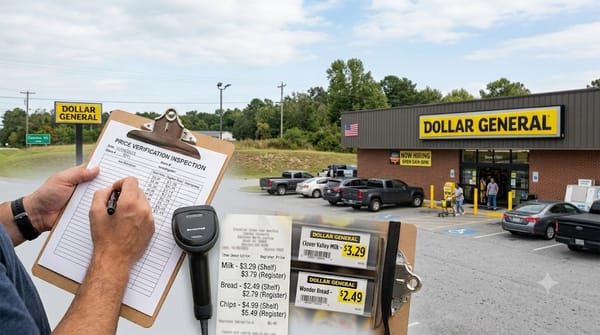
Camden Dollar General Among 16 NC Stores Fined for Scanner Errors
A Camden County Dollar General was among 16 North Carolina retailers fined after state inspectors found repeated checkout overcharges. Camden Tribune explains what happened, reviews the store's inspection history, and shows shoppers how North Carolina's price verification program protects consumers.B&M schedules mining-permit meeting; Camden says no application is on file
B&M’s September 23 meeting concerns a proposed mining permit at 399 Ponderosa Drive. Camden says no application is on file; attendance questions remain.
Sawyer Says South Mills Development Could ‘Outrun’ Sewer Plant as Moratorium Nears End
South Mills wastewater averaged about 25% of stated capacity in July, while Camden says proposed development will require substantially more treatment capacity.
Camden Board Backs Posting Delinquent Taxpayer Names on Social Media for ‘Extra Pressure’
Camden commissioners backed posting delinquent-tax information on county social media after the county manager said broader exposure could add “a little extra pressure” to pay.